Partner Leona Huntzinger
Queer Places:
Three Springs Farm, 211 Conestoga Rd, Malvern, PA 19355, USA
Northwood Cemetery, 1501 Haines St, Philadelphia, PA 19126, United States
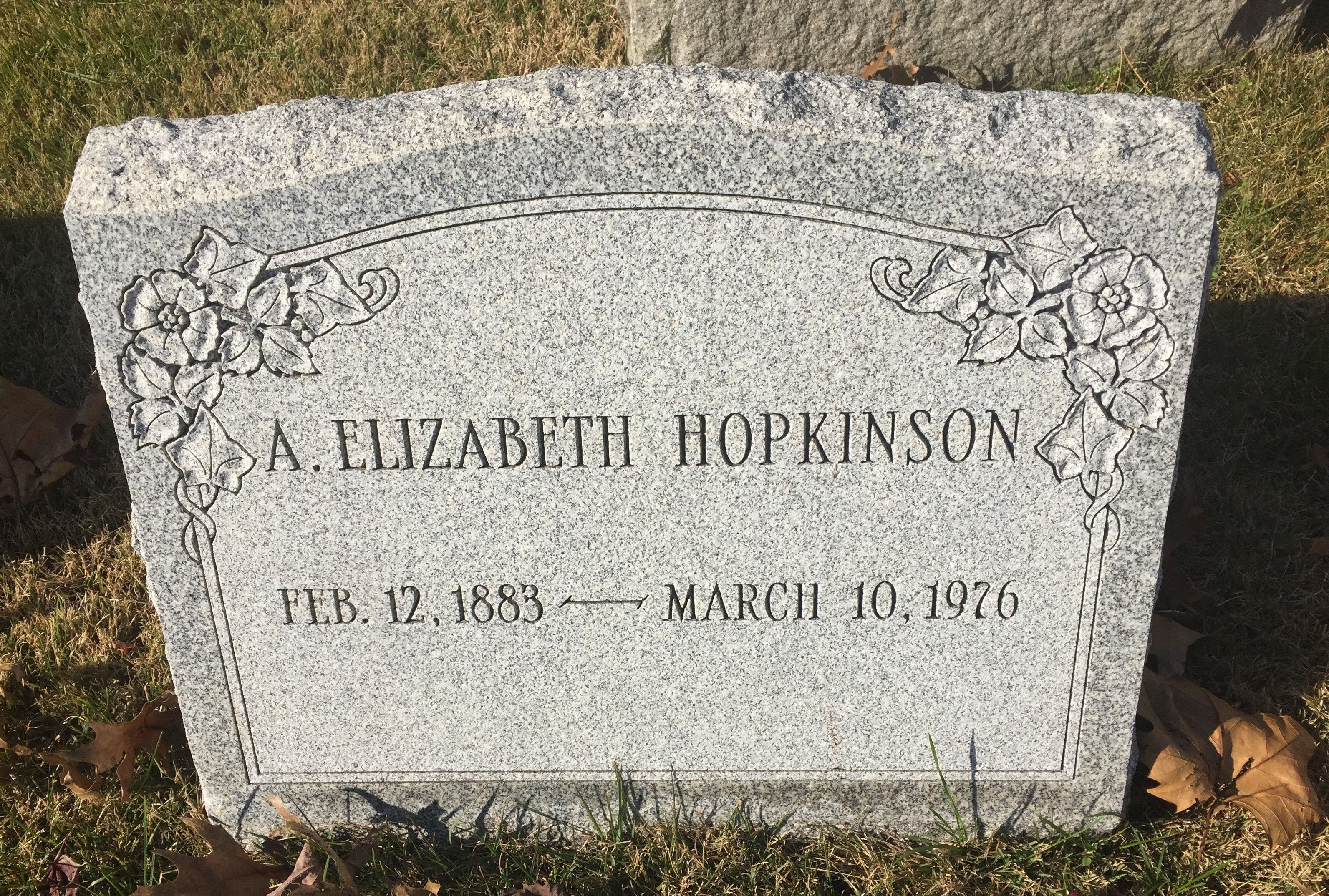 Annie Elizabeth Hopkinson (February 12, 1883 - March 10, 1976) was born in England on February 12, 1883, to William and Annie Hopkinson. In 1889, at the
age of six, she immigrated with her family to the United States, settling in Philadelphia, Pennsylvania. As a young woman, Hopkinson entered the
industrial workforce, taking a job in Philadelphia's bustling lace mills. It was within this environment that she met
Leona Huntzinger. The two women formed a deep, lifelong bond, becoming close friends and domestic partners.
Their connection deepened when Huntzinger moved into the Hopkinson family home as a boarder, effectively becoming an integrated member of the household.
Together, Hopkinson and Huntzinger laboured side by side in the lace mills for over fifteen years before directing their shared energies toward political
activism.
Their foray into public advocacy began around 1915 when the Pennsylvania Woman Suffrage Organization hired Huntzinger to represent and organize
working-class women. By May 1916, Hopkinson and Huntzinger set out on an adventurous cross-country journey, supporting themselves through odd jobs. They
traveled to Chicago, finding temporary employment as housekeepers and residing in a boarding house alongside fellow domestic workers. Their plans to
continue westward shifted when the New York State Suffrage Association offered them positions as suffrage speakers. Recognizing a unique opportunity, the
partners purchased a Ford automobile, which doubled as their mobile transport and housing.
Beginning in June 1917, the pair conducted a six-month suffrage tour across New York State. By day, they delivered public addresses from the back seat
of their automobile, and by night, they converted the vehicle's seating into a bed. They faced frequent public harassment from male onlookers who sang
derogatory refrains asserting that equal rights made women unmarriageable. Despite these heteronormative societal pressures, Hopkinson and Huntzinger
found liberation and fulfillment in their itinerant lifestyle, enjoying the autonomy of traveling and living together outside traditional social
conventions.
Following the suffrage campaigns, the couple established a permanent, non-traditional domestic life in rural Pennsylvania. They purchased Three
Springs Farm in Bacton, where they constructed a chosen family structure. By 1930, Hopkinson and Huntzinger had taken in four young boys, aged seven to
thirteen, who lived and worked alongside them on the property. These children were placed with them through organizations like the Children’s Aid
Society, which sought agricultural homes for destitute or abandoned youth. This household—comprising two former suffragists turned farmers raising
adopted children—represented a distinct example of early twentieth-century queer family formation.
Leona Huntzinger passed away in 1937, leaving her entire estate, including Three Springs Farm, to Hopkinson to ensure her surviving partner retained
secure housing. Elizabeth Hopkinson never married, remaining single for the rest of her life while maintaining the home and legacy they built together.
She lived to the age of 93, passing away on March 10, 1976. Hopkinson was laid to rest at Northwood Cemetery in West Oak Lane, Philadelphia,
Pennsylvania.
References:
Other references:
- Moravec, Michelle Katherine Pettine, and Hope Smalley. "Stunts and Sensationalism: The Pennsylvania Progressive-Era Campaign for Women's Suffrage." Pennsylvania History: A Journal of Mid-Atlantic Studies 87, no. 4 (Autumn 2020): 631–656.
- Rouse, Wendy. "Leona Huntzinger." OutHistory (Exhibit: The Queer History of Women's Suffrage: Scholarship and Censorship).
- Rouse, Wendy. "(Annie) Elizabeth Hopkinson." OutHistory.
- Sheffey, Christian. "Biographical Sketch of Leona Huntzinger." Online Encyclopedia of Women's Suffrage in the United States, Alexander Street / Alexander Street Press.
- The Philadelphia Inquirer (May 16, 1913, p. 18) – Interview regarding labor reforms and the Walnut Bill.
- Altoona Mirror (September 13, 1915, p. 9) – Report on Huntzinger's public suffrage speaking engagements.
- Harrisburg Daily Independent (May 22, 1916, p. 4) – Coverage of suffrage organizing activities.
- Binghamton Press and Sun-Bulletin (October 2, 1917, p. 7) – Coverage of the Industrial Section of the New York State Woman Suffrage Party tour.
- Pennsylvania Department of Health, Certificate of Death for Leona Huntzinger (August 13, 1937, East Whiteland Township, Chester County).
- United States Federal Census Records (1930) – East Whiteland Township, Chester County, Pennsylvania (Three Springs Farm household documentation).
- Find a Grave / Cemetery Records – West Laurel Hill Cemetery, Bala Cynwyd, Montgomery County, Pennsylvania.
Support this project
This website is a passion project researched, developed, and funded entirely by me. If you find the content valuable and would like to help support the ongoing research and hosting costs, any contribution is deeply appreciated.
Thank you for keeping this independent resource alive!
My books on Amazon: Elisa Rolle's books
BACK TO HOME PAGE
